How do I calculate burden voltage in a low-voltage circuit?
A current measurement is part of the circuit. Estimate the drop from current and burden voltage per ampere before deciding whether the reading has changed the device.
What this can establish
Added voltage
A first estimate of the series drop introduced by the current path.
Remaining headroom
Whether the idealised drop is a material share of a low-voltage supply.
Method choice
When a shunt, clamp or different current range deserves comparison.
What this cannot establish
Burden can vary with range, protection, fuse and current. The simple product here does not include lead resistance, regulator response, dynamic load changes or the actual meter's transient behaviour.
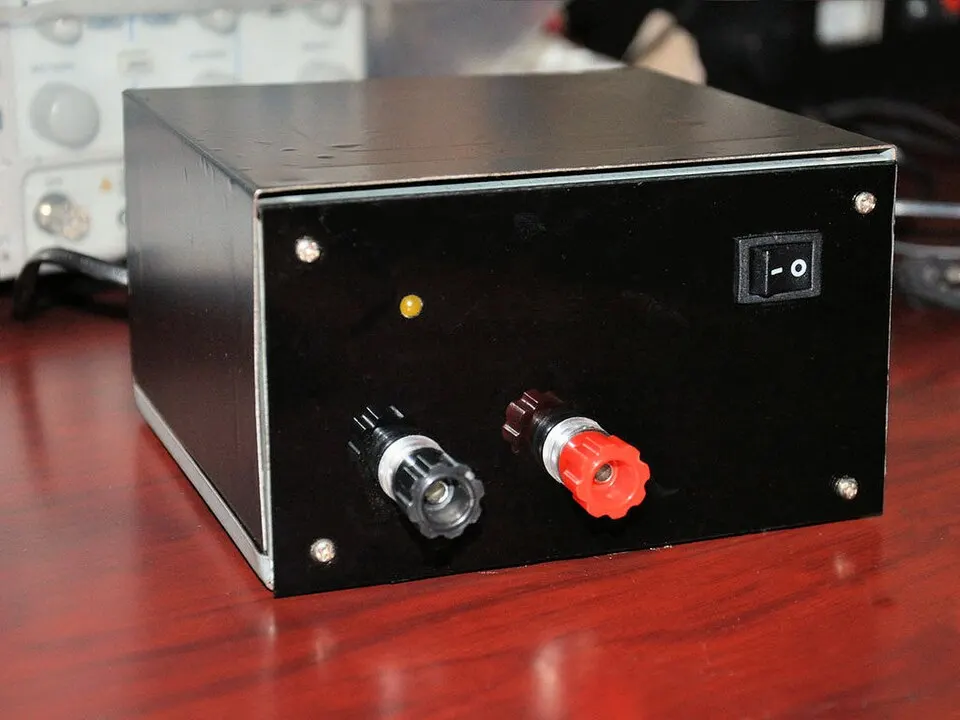
Real scene: measure the voltage at the load
When inserting an ammeter, measure supply voltage at the device before and during the current reading. A lower voltage can change firmware state or regulator behaviour, so the current number may no longer describe the original circuit.
Illustrative Wikimedia Commons scene; not a Meter & Probe test.
Next measurement
Repeat the test with a known shunt and a suitable differential measurement, or compare the current path with a clamp around a single conductor. Keep the shunt value, sense wiring and load voltage with the result.
Why does connecting my multimeter change the circuit current?
What is burden voltage in a multimeter?
How do I calculate burden voltage in a low-voltage circuit?
Does a multimeter affect a battery-powered circuit?
How do I measure current without disturbing the circuit?
When should I use a shunt instead of a multimeter?
How much voltage drop does an ammeter add?
What is multimeter burden voltage?
Burden voltage is the drop introduced by an ammeter in series with a circuit. When a range specifies burden in mV/A, multiply it by the current in amperes to estimate the drop in millivolts.
Worked example: At 20 mA, a burden of 1,200 mV/A gives 24 mV of drop. In a simple 3.3 V model the remaining voltage is about 3.276 V.
Assumptions and limits: This assumes the entered current is unchanged by the meter and the burden scales linearly. If the drop takes much of the supply, the circuit may draw a different current.
Can I measure 200 mA with a shunt without losing more than 30 mV?
For an isolated, current-limited setup, 30 mV at 200 mA allows a maximum of 0.15 Ω across the whole series path. Also check dissipation, peak current and whether the voltage signal is large enough to resolve.
Record the instrument, connections and operating state alongside the number.
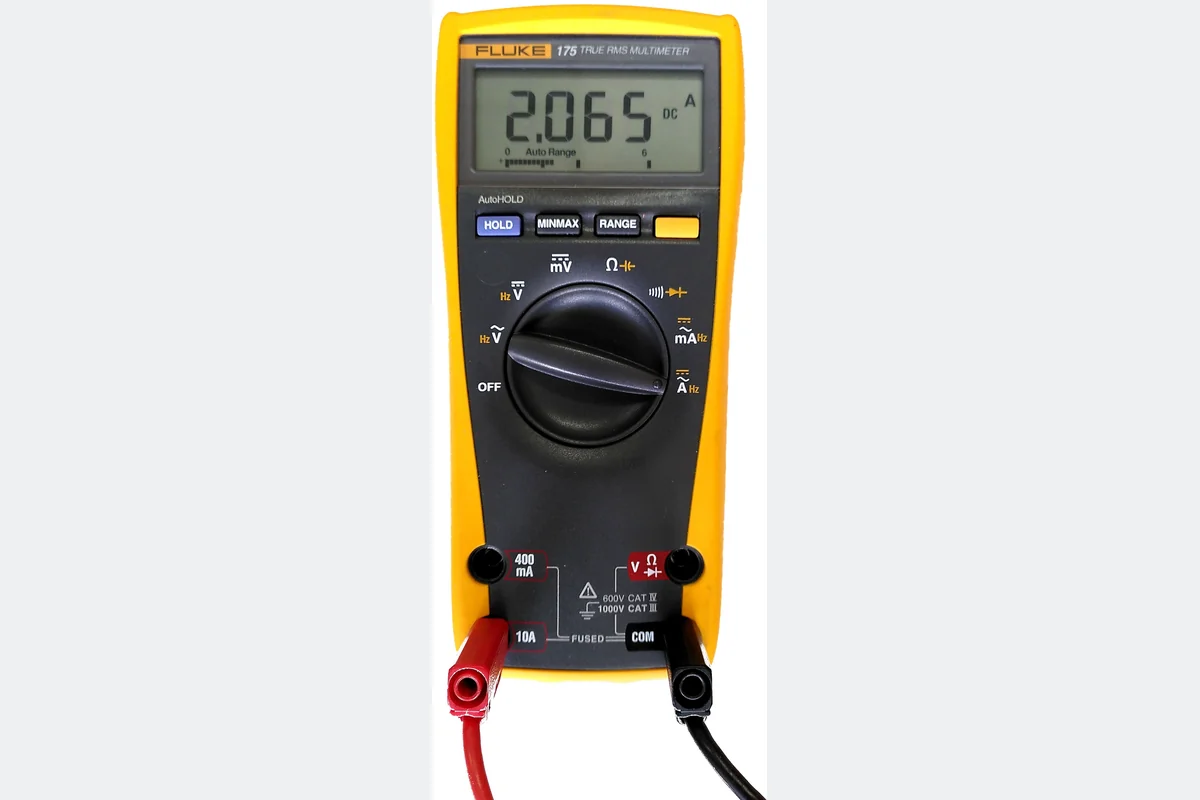
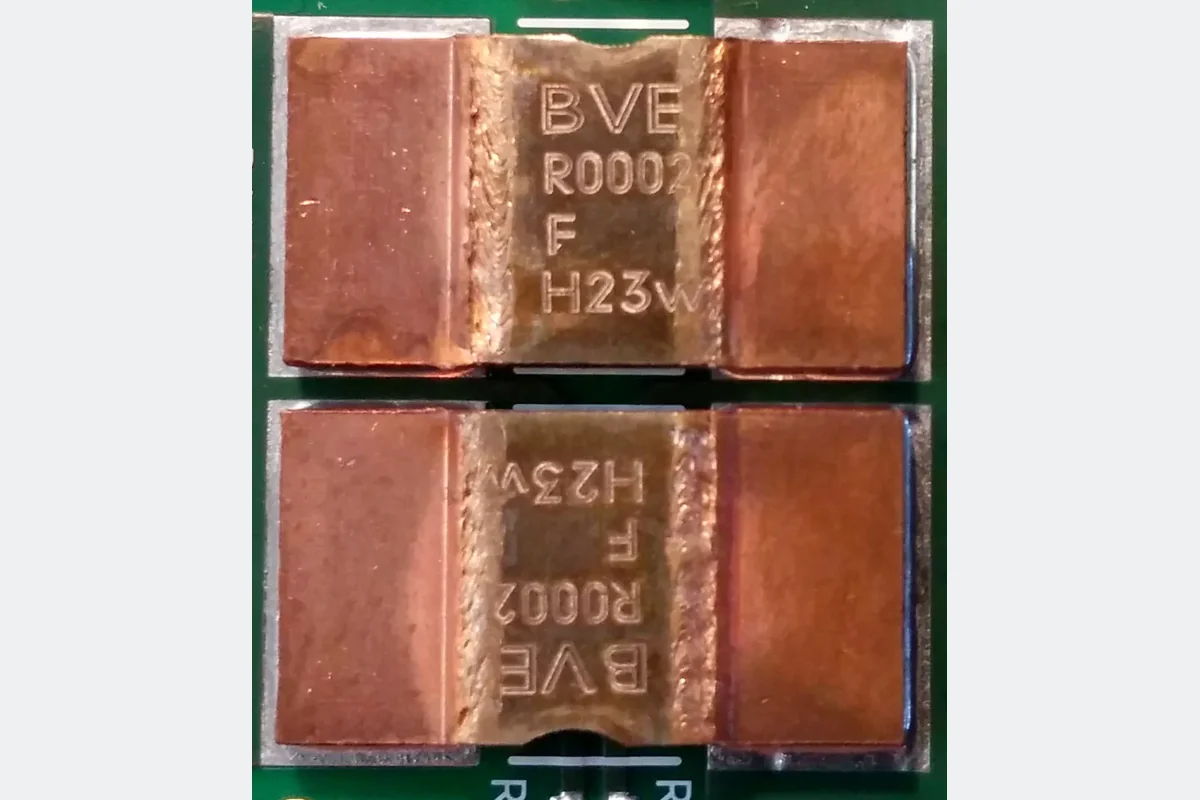
A current function has a specified input path. Check its burden and limits before inserting it in a low-voltage supply.Real photograph · illustrative context, not a Meter & Probe test.Christiankral / Wikimedia Commons · CC BY 4.0 · resized and letterboxed for webReal SMD shunt resistors illustrate the small resistance and voltage signals that need an explicit error budget.Real photograph · illustrative context, not a Meter & Probe test.wdwd / Wikimedia Commons · CC BY-SA 4.0 · resized and letterboxed for web
Free online measurement tools
Free burden voltage calculator
Estimate the voltage drop introduced by a series current measurement on a low-voltage circuit. Use this free online measurement tool without creating an account. The worked example and limits on this page explain how to read the result.
No sign-up. No subscription. All eight tools are free to use.
Why does the calculator reject a drop greater than the supply voltage?
That result contradicts the assumed operating current for this simple source-and-drop model. Check the units, range and whether the device would still operate.
Does this tool include the energy dissipated in the meter shunt?
It estimates voltage drop at an assumed current. Shunt power and heating require a separate current-squared-times-resistance assessment under the actual conditions.