
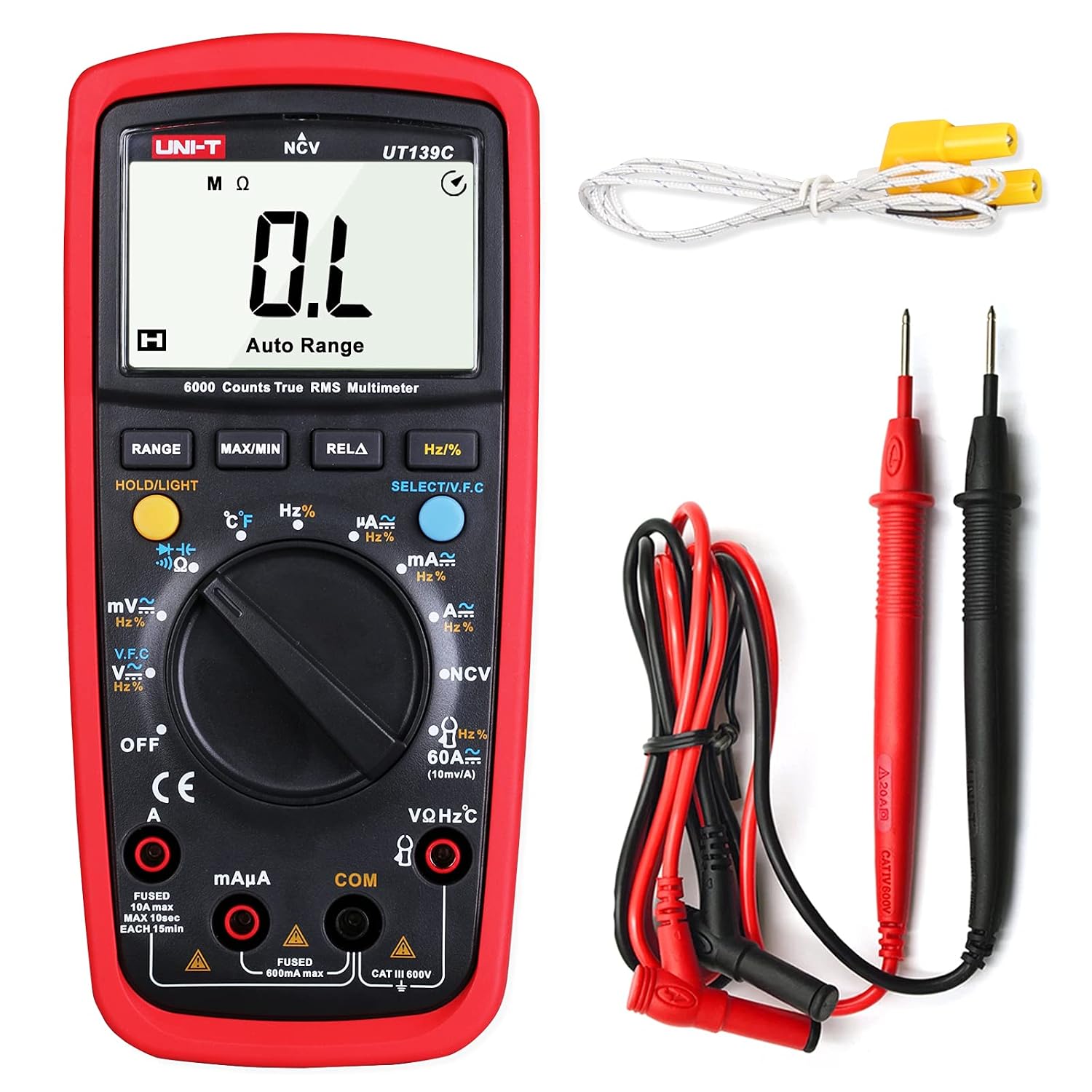
UNI-T UT139C
6000-count lead-based candidate for voltage, resistance and continuity. Read the exact accuracy table for the active range.
View listing ↗Commercial link · no independent hardware test claimed.Instrument picker
Choose the measurement first. Then check the range, accuracy and conditions in the instrument’s manual.
Choose the method that keeps the circuit and the question visible.
Product fit
Prices, supplied sets and availability can change on Payverza.
6000-count lead-based candidate for voltage, resistance and continuity. Read the exact accuracy table for the active range.
View listing ↗Commercial link · no independent hardware test claimed.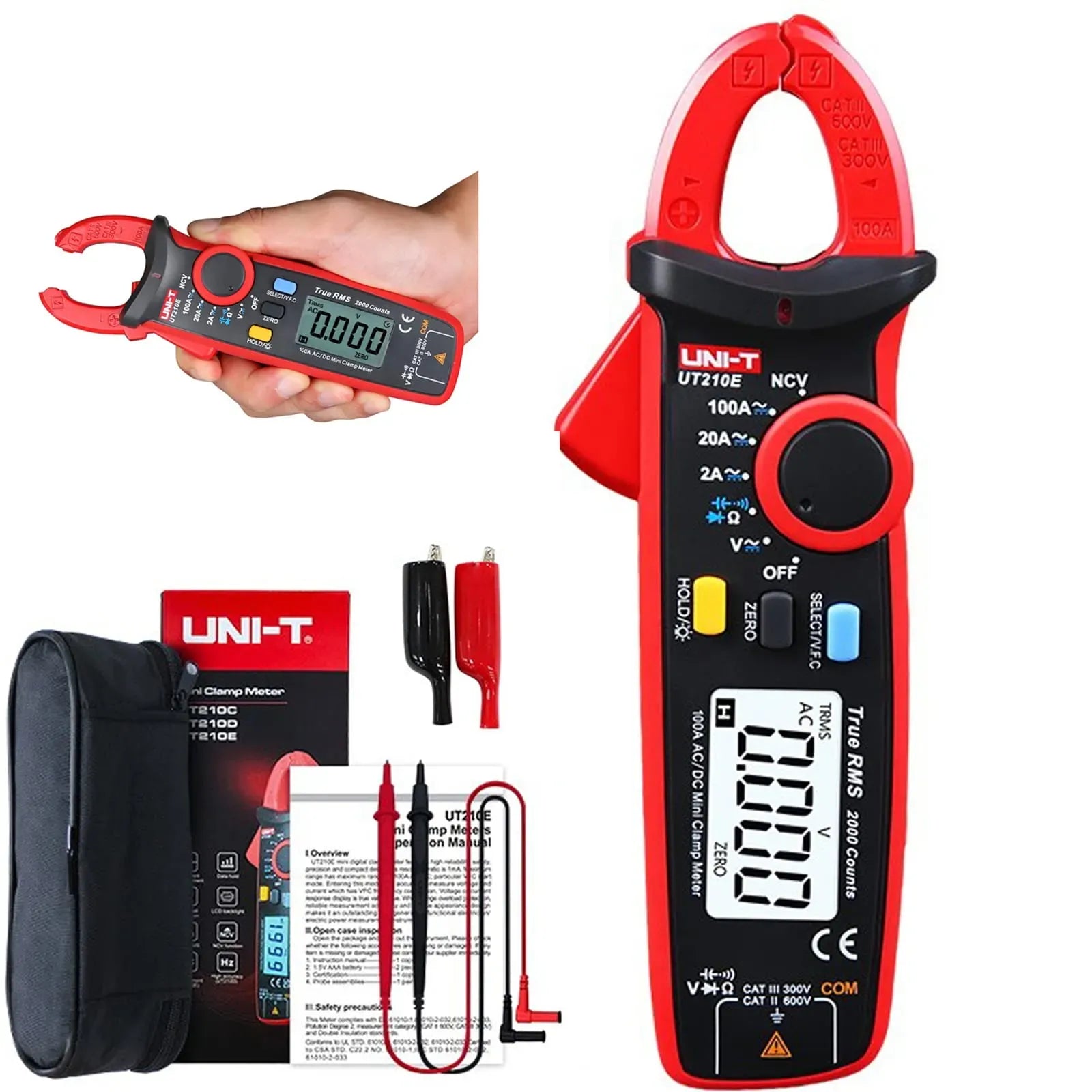
AC/DC clamp candidate for a single conductor. A 2000-count display does not establish small-current accuracy.
View listing ↗Commercial link · no independent hardware test claimed.Use the maker’s manual to confirm the function, range and conditions for your measurement.
Read our methods →Counts, True RMS, low-current clamp, burden voltage and CAT evidence live in the existing article URLs.
Read methods →A product link can help with the next step; it cannot certify a circuit or installation.
Read disclosure →Use a probe multimeter for steady voltage, resistance or continuity. Use a compatible clamp to check current around one accessible conductor without opening it, a shunt to measure a small current by its voltage drop, or an oscilloscope to see a changing waveform over time.
Worked example: For a pulsed battery load where timing matters, measure the shunt voltage over time. A single value on a handheld display might miss the pulse.
Assumptions and limits: Choose by required function, range, speed, accuracy and permitted measurement conditions. Current resolution and a safety category alone do not establish suitability.
References: Meter & Probe measurement methods and source policy
For isolated low-voltage work, prioritise usable DC ranges, readable specifications and continuity. Choose the features needed for your actual task before paying for more.
Check DC voltage, resistance, continuity and probe tip access on an isolated board. Fine tips can help reach a pad; verify lead compatibility and avoid bridging neighbouring pads.
A lead-based multimeter is usually the direct choice. Use a suitable clamp when the task is to measure current around an accessible single conductor.
Some clamps have lead functions. Compare each range and connection you need, particularly small current and low resistance, rather than assuming equivalence.
It can make routine measurements simpler. A manual range can make comparisons easier when the displayed precision would otherwise change between samples.
Compare low-current sensitivity, circuit disturbance and timing. A clamp avoids insertion but may lack sensitivity; an inline meter and a shunt both add voltage drop.
Record the instrument, connections and operating state alongside the number.
Free online measurement tools
Choose a measurement method for isolated low-voltage electronics: probes, clamp, shunt or waveform capture. Use this free online measurement tool without creating an account. The worked example and limits on this page explain how to read the result.
No sign-up. No subscription. All eight tools are free to use.
Browse all free multimeter tools →Practical questions
A suitable voltage-input multimeter can address a steady value. Confirm its range, input loading and required error limit for the actual source.
Link to this answerA compatible current clamp is one option when a conductor can be measured appropriately. Check AC/DC capability, signal size, drift and conductor geometry.
Link to this answerConsider a method that resolves the quiet state and captures active events without changing operation. Clamp, series-meter and shunt approaches have different limitations.
Link to this answerChoose a waveform view when timing, startup dips, pulse edges or intermittent events are central to the question. Digits do not supply that time information.
Link to this answerDisplay capacity is one specification. Match required functions, range limits, loading, response and supporting documentation to the decision you need to make.
Link to this answerConfirm genuine DC-current capability, the appropriate range and whether signal size exceeds display step and baseline variation under the intended arrangement.
Link to this answerThe interactive scope is identified isolated, low-voltage work. It does not establish a safe measurement method for unknown, mains, EV or high-energy sources.
Link to this answerNo. Selecting an instrument type does not verify a model’s safety evidence. Review the exact documentation and relevant professional requirements.
Link to this answerDescribe the signal, expected range, smallest useful change, time behaviour and acceptable circuit disturbance. Those requirements make a specification comparison meaningful.
Link to this answerCheck the exact model and current listing against the method’s requirements. A commercial link does not establish every range, accessory or performance claim.
Link to this answer
