
THE DIRECT ANSWER
mAh describes charge; Wh describes energy. A nominal estimate is Wh ≈ (mAh ÷ 1000) × battery voltage. Across a voltage converter, compare energy and load power with justified efficiency assumptions, or measure current at the battery boundary. Divide mAh by mA only when capacity and current refer to the same boundary and suitable conditions.
Estimate runtime from a battery-side current profile →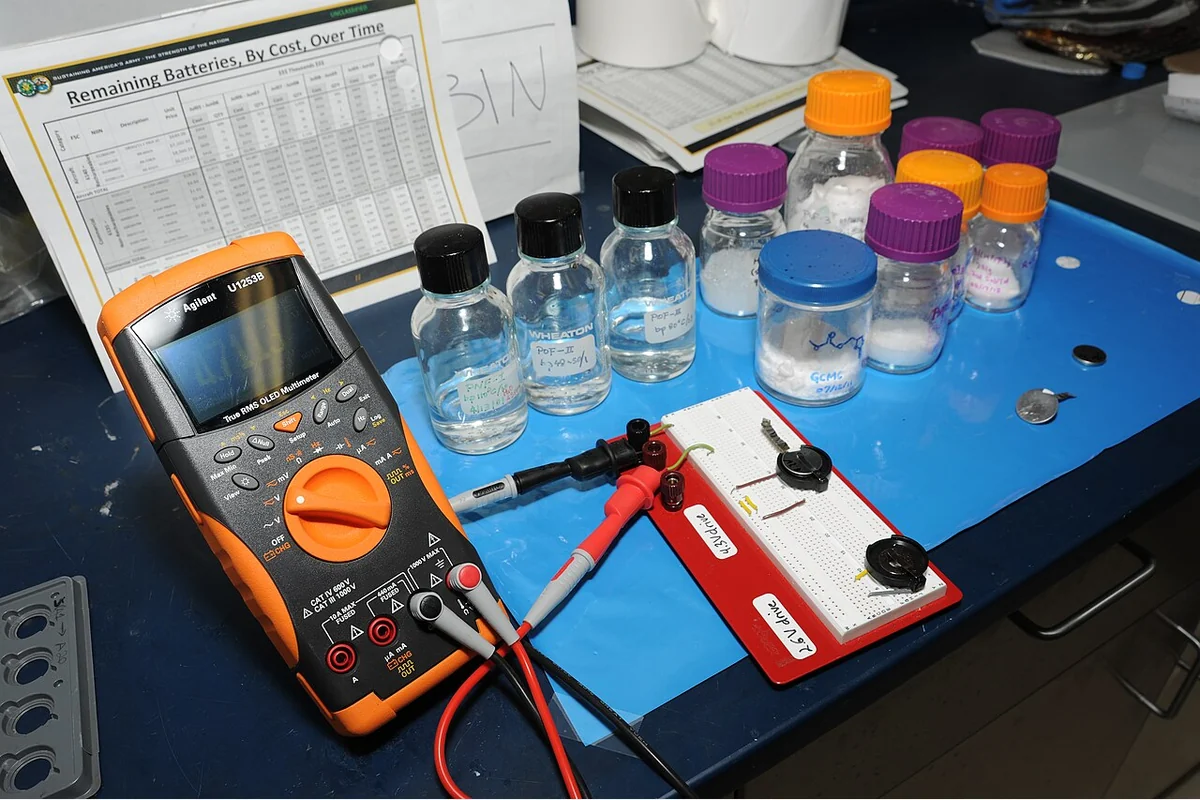

Start with what the two units mean
One amp-hour is a quantity of charge: the charge transferred by one ampere for one hour. A milliamp-hour is one thousandth of that. It does not specify how much energy the charge can deliver without voltage information.
Power is voltage multiplied by current. Energy is power accumulated over time. If voltage were constant, multiplying amp-hours by volts would give watt-hours directly. A battery’s voltage changes during discharge, so multiplying label capacity by nominal voltage is an approximate energy comparison.
Use the manufacturer’s stated Wh value or discharge information when available, and keep its test conditions. Capacity measured to one cutoff, at one current and temperature, may not be available to a different device. Nominal energy is not a measured usable-energy guarantee.
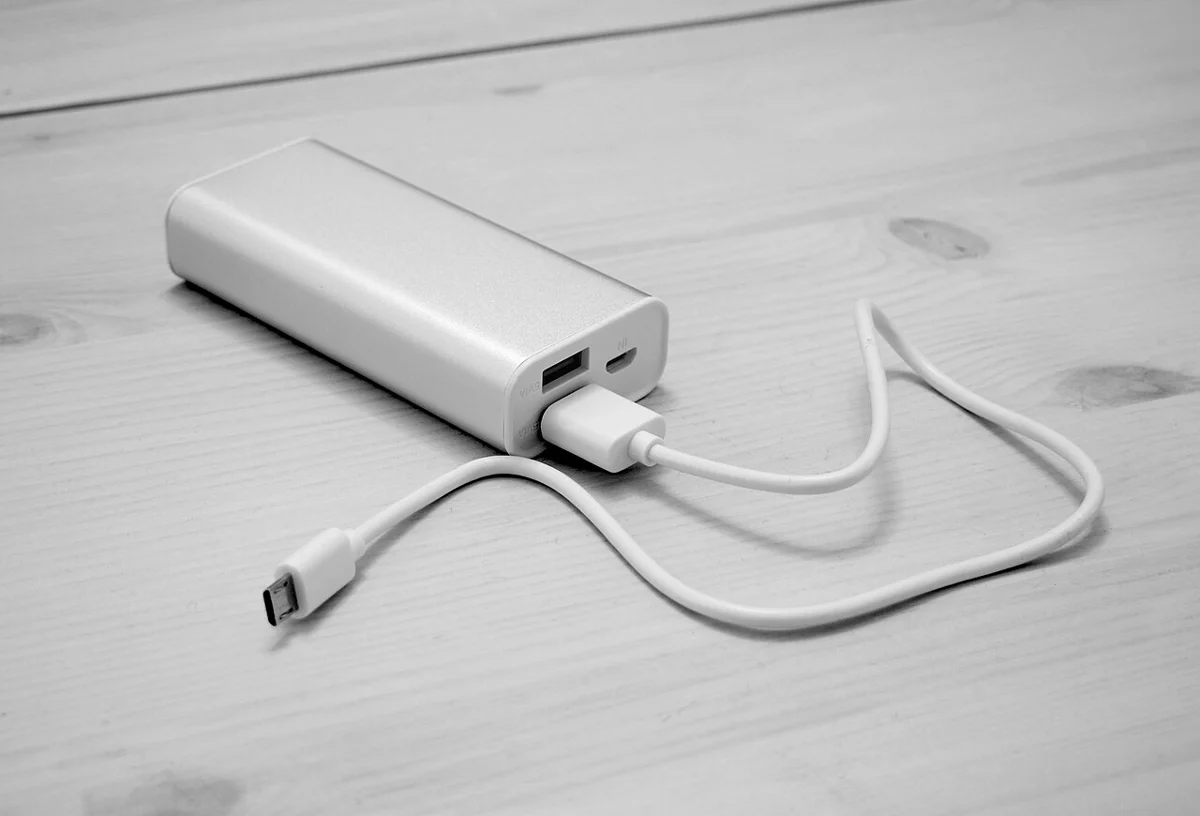
A Reddit buyer compared a 99.16 Wh power bank with an 86.4 Wh model advertised to charge a phone more times. Nominal energy and delivered charges are different claims: conversion, cutoff and the phone's use during charging all affect the result.
Worked example: a battery feeding a different voltage rail
Assume a hypothetical 3.7 V nominal battery labelled 1000 mAh, feeding a steady 5 V load that draws 500 mA through a converter. These are illustrative inputs, not a recommendation for a particular cell or power module.
| Quantity | Calculation | Result |
|---|---|---|
| Approximate nominal battery energy | 3.7 V × 1.0 Ah | 3.7 Wh |
| Load power | 5 V × 0.5 A | 2.5 W |
| Ideal runtime with no loss | 3.7 Wh ÷ 2.5 W | 1.48 h, or 88.8 min |
| Assumed delivered energy at 85% efficiency | 3.7 Wh × 0.85 | 3.145 Wh |
| Runtime using that fixed efficiency assumption | 3.145 Wh ÷ 2.5 W | 1.258 h, or about 75.5 min |
Dividing 1000 mAh by the 500 mA load would give two hours, but it mixes battery-side charge with current on the 5 V side. The converter changes that relationship. The 85% figure above is an assumption, not a typical or tested efficiency claim.
A converter does not have one efficiency for every state
Check efficiency at the input voltage and load of interest, including sleep operation. A converter can be efficient at an active load yet consume a significant fraction of a very small standby load. Quiescent current and other always-on paths also need inclusion.
At a fixed output power, input current generally changes as input voltage changes. A single battery-side current measured near the start of discharge may not represent the entire run. Startup, radio bursts and device cutoff can further change the usable result.
If a quoted efficiency already includes a particular loss, do not subtract the same loss a second time. Define your system boundary: battery terminals, converter input, or regulated load. Then list what is included in the measured or modelled value.
Use the current-profile tool at one boundary
Our battery-runtime calculator combines state currents and time shares, then divides usable capacity by the average current. It does not automatically translate current across different voltage rails or model a battery’s discharge curve.
For that tool, prefer representative battery-side sleep, wake and transmit currents, all measured at the same boundary. Use a capacity appropriate to the battery, load, temperature and device cutoff. If the stated capacity is only a label figure, describe the result as a nominal estimate.
If you only have currents on the regulated side, first build an energy model with the corresponding voltage, timing and conversion behaviour. Do not enter those currents beside a battery mAh value at another voltage and expect the tool to infer the missing converter.
Compare candidate batteries with the device in mind
Two packs with the same mAh rating at different voltages can have different nominal energy. Conversely, a higher Wh label does not by itself prove a longer runtime in your device: compatibility, delivery limits, usable voltage range and conversion losses still matter.
For series or parallel arrangements, use the manufacturer’s pack-level capacity and energy specifications rather than adding unlike label figures. Cell matching, protection and charging are separate design requirements; this arithmetic is not a battery-pack construction guide.
Write down nominal energy, assumed usable fraction, load power or current profile, conversion assumptions and cutoff behaviour. A representative runtime test can then be compared with a clear model, and an unexpected result can be traced to an assumption rather than a mysterious “mAh discrepancy”.
Common questions
Is a higher mAh number always a longer-lasting battery?
Only compare it directly under compatible voltage and discharge conditions. Across different voltages, Wh is a more useful nominal energy comparison, but usable energy and device requirements still decide runtime.
Should I multiply by efficiency or divide by it?
When converting available input energy into energy delivered to the load, multiply by efficiency. When estimating required input power from output power, divide by efficiency. Use the same clearly defined boundary.
Can nominal voltage give an exact Wh value?
No. It gives an approximation when multiplied by Ah. Exact delivered energy depends on the voltage and current over the discharge interval and on the chosen cutoff.

Sources and scope
Written from the references below and checked on 19 November 2026. Examples are illustrative calculations, not Meter & Probe hardware tests. Use the manual and data sheet for your exact equipment.
- OpenStax — Electric Power and Energy; P = IV and energy over time
- OpenStax — DC Voltmeters and Ammeters; the instrument becomes part of the circuit
- AllMultimeterGuide — Battery Voltage Checker; comparison reference for common voltage questions
Our guides cover isolated low-voltage electronics. Read our methods and commercial disclosure.
Make the next check
Estimate runtime from a battery-side current profile using the conditions you recorded.
Open the matching tool →